

While sitting on the long plane ride from Seattle to Oʻahu, One Fish Foundation Operations Manager Mara Welton and I chatted a bit about Hawaiʻi culture – something I admittedly knew little about. I knew the term “Aloha” meant more than simply “hello” and “goodbye.”
But I didn’t really understand the context until speaking with local folks, seeing how and when they used the term, and intentionally asking questions. I came to understand how “Aloha” can be an open declaration of kindness and respect, perhaps even an invitation to someone to share their story, or connect.
That became an important realization, particularly given our mission for visiting Oʻahu last month. Slow Fish North America and One Fish Foundation worked closely with Slow Food Oʻahu to curate a series of community events to uplift local seafood producers and retailers and find ways to spread the message into communities around Oʻahu and throughout the islands.
We hosted three events in three days: A Chefs Camp, a day of local seafood tours on land and at sea, and a KNOW FISH Dinner®.
It was an ambitious goal. Thanks in part to the Aloha Spirit (which is actually written into state law), folks involved with these events, including planners, storytellers, guides, chefs, musicians and attendees, approached each engagement with kindness, respect and a willingness to connect.
Perhaps that explains the events’ success.
Chefs Camp
Planning a gathering of chefs and local fishermen in Oʻahu presented some unique challenges and opportunities. Not only is the local seafood vastly different from what’s available in the continental US, the regulations, markets, supply chains, and cultural narratives around seafood in the islands are different.
Fortunately, working with Slow Food Oʻahu we were able to connect with local chefs and seafood producers to get a sense of the challenges of getting local seafood into more restaurants.
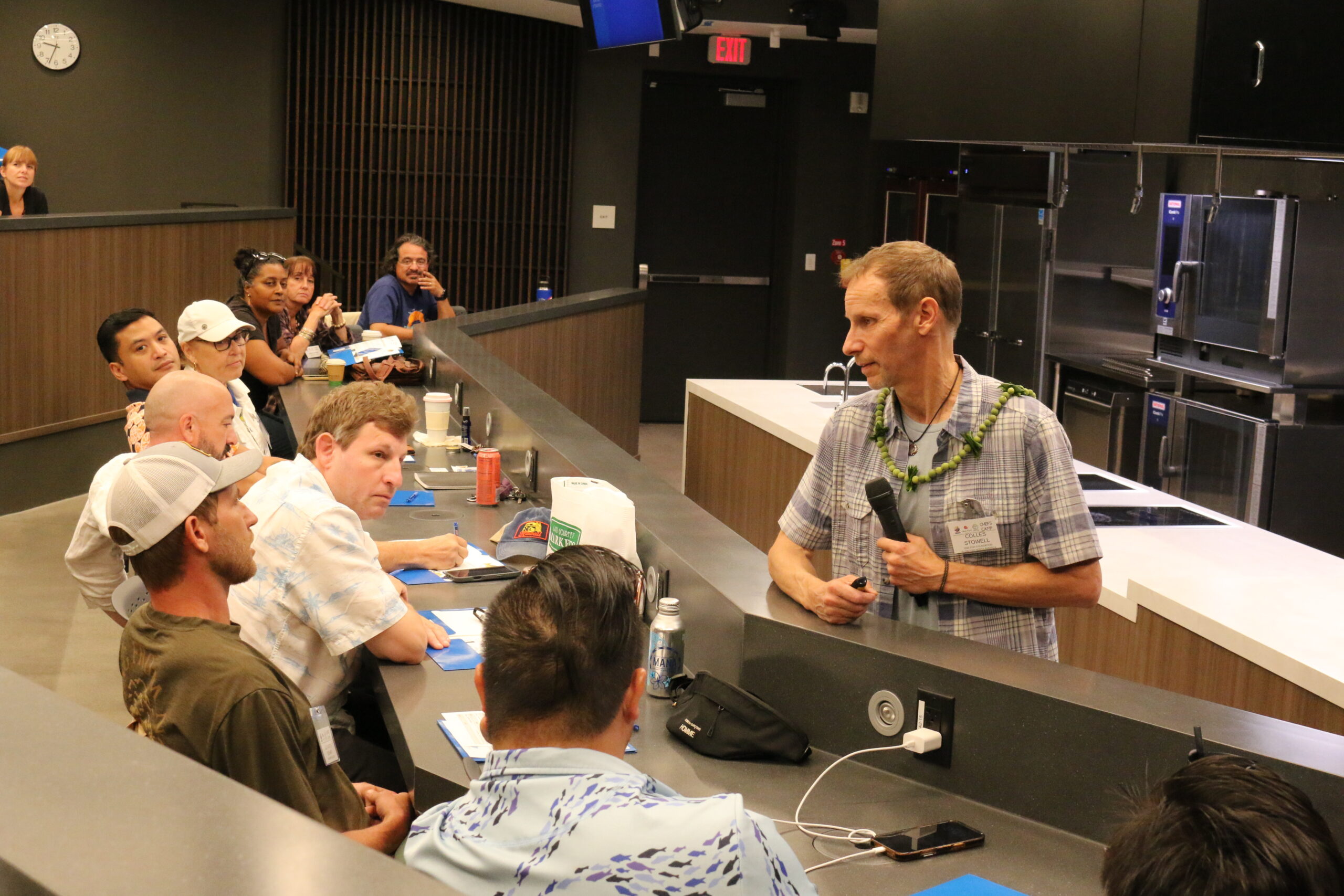
During the Chefs Camp, we explored some of these obstacles and brainstormed possible solutions via storytelling and interactive conversations. Fisherman Riggs Napoleon described the hazardous work of fishing for yellowfin tuna (locally dubbed ahi) out of a 19-foot skiff 20-100 miles offshore. He talked about the challenge of getting a good price for his catch after the local auction house typically prioritizes the harvest from larger boats.
-
- Ashley Watts of Local Iʻa describes the importance of paying local fishermen like Riggs a fair price. Photo: Vincent Maverick Jagon
-
- Riggs Napoleon is unafraid to chase big fish in big waters in a small boat. But he wants more people to eat more local seafood. Photo: Vincent Maverick Jagon
For him, getting more people to buy local fish, especially from smaller boats, would go a long way toward elevating the sustainability of seafood in Oʻahu and beyond.
Ashley Watts shared that sentiment. She owns and operates Local Iʻa, a fish market offering direct retail or prepaid community supported fishery sales in Honolulu. A marine biologist, she cares about supporting healthy local fisheries and small-boat fishermen. Of most importance to her is paying fishermen a fair price … something fishermen around the world deserve and badly need, but sadly don’t often get.
We discussed similarities between local farmers and fishermen, and how fair pricing allows them to do the hard work they do, even in the face of rising diesel costs, shifting markets, and climate change.
Invasive species, often arriving and thriving due to climate impacts, were a central part of the conversation as attending chefs learned about ways to diversify their menus with conservation as a goal.
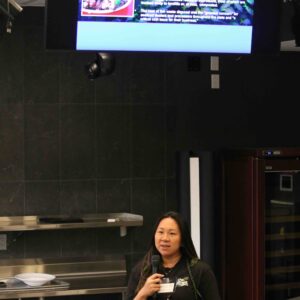
Jhana Young of Conservation International talks about Hawaiʻian Foods and invasive species. Photo: Vincent Maverick Jagon
Jhana Young of Conservation International (CI) described the Taʻape Project, which highlights eradication of invasive taʻape (blue-striped snapper) by working with chefs to put it on their menus and collaborating with partners to turn the fish skin into colorful leather that has been used to make consumer goods like shoes. Vincent Maverick Jagon, Pacific Islands Coastal Health Fellow with CI, discussed a project to incorporate invasive gorilla ogo (a fast-growing seaweed) on menus and possibly give it a better sounding name.
Miwa Tamanaha described the cultural significance of limu, a native sea vegetable once prominent in Hawaiʻian cuisine and now threatened by climate change and invasive species like gorilla ogo. She described the ʻEwa Limu Project, which aims to restore limu abundance and its cultural harvest and consumption by native communities.
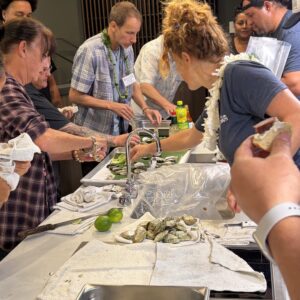
Ingrid Lassleben storytelling and sharing the oysters she brought from Kualoa Ranch. Photo: Mara Welton
We heard from Ingrid Lassleben of Kualoa Ranch about growing oysters, including the roughly two-year lifecycle, the exhaustive process of sorting them for proper growth until they reach market size while also ensuring they are free of toxins that can arise. Weather plays a role. The spate of hurricanes and big storms that passed through Hawaiʻi in late summer resulted in stopped production and product loss. Kualoa sells its oysters in its market store and to local restaurants and markets like Local Iʻa.
Building a community
All of these stories fed into the larger discussion of building relationships between local chefs and local seafood producers and retailers.
One unique factor with seafood sourcing in Hawaiʻi is that seafood harvested or sourced within 1,000 miles of the islands can sometimes be considered “local” due to how the supply chain in the region works.
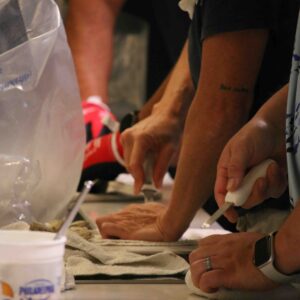
Building relationships and growing a community are hands-on work. Photo: Vincent Maverick Jagon.
That’s why we focused on how to promote more direct relationships. As is often the case with chefs in other regions, chefs from Oʻahu and beyond stressed the importance of product quality, consistency and predictability. Being able to know what will be available in advance can be difficult due to myriad factors like weather, seasonality, and the nature of commercial fishing.
We discussed examples where some chefs have been in direct contact with fishermen coming into port to learn what was in the harvest and order ahead. Having the relationship in place is essential.
Community engagement was another key topic. How can a collective of allied chefs and seafood producers broadly educate folks in their communities about why they should care about buying local seafood? We discussed the different types of education opportunities, whether on menus or during events such as KNOW FISH Dinners or Seafood Marketplaces, where folks can hear the story of their seafood directly from the producers.
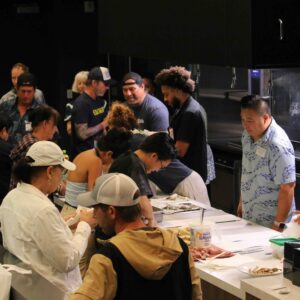
Local seafood is the key ingredient to Chefs Camp community engagement. Photo Vincent Maverick Jagon
Most importantly, the collective generated the enthusiasm and commitment to keep diving into these issues to find more ways to collaborate and bring more folks into the conversation.
So how do we know the Chefs Camp was successful? The exchange of contact information, the creation of an email listserv for continued dialogue, and the commitment to meet again.
Seafood Tours
Several chefs from the Camp attended one of two seafood tours on the following day.
One group visited the Kualoa Ranch, where guides talked about cultural traditions of oyster production in the centuries-old Moli‘i Fishpond. Attendees also learned about the small-scale shrimp production that occurs at the Pahalona site. Key to Kualoa’s mission, whether producing shrimp, taro, pigs, or fruit, is ensuring a sustainable and ecologically balanced approach that honors cultural threads but yields wholesome and delicious foods.
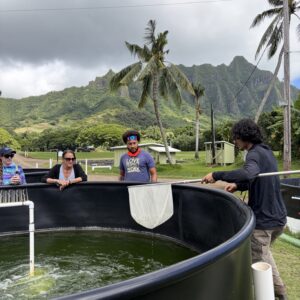
During the tour of Kualoa Ranch, participants learned about harvesting oysters and shrimp as well as how beef and pork are raised at the farm. Photo: Mara Welton.
This balance between taste and ecological harmony brought up another local cultural concept: “ʻono and pono.” Literally translated as “tasty and righteous,” ʻono and pono implies the food is delicious and it is produced in a way that is good for the environment and the people who produce it. Another new phrase for me, “ʻono and pono” became a reference point for finding that balance for all of our engagements in Oʻahu.
A second group went commercial fishing for taʻape with Captain Chris Tom out of Kāneʻohe Bay. The mission was to jig for taʻape in 60 to 90 feet of water, return with fish to eat and remove some unwanted invasives. Despite rough seas, we harvested about 30 taʻape and a couple of other species, including moana. During the trip, Chris and his son Chas talked about fishing within Nature’s rhythms, like adapting to different weather and tidal conditions, and pursuing abundant and invasive species.
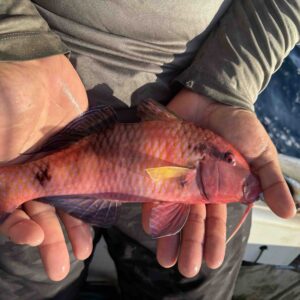
Chefs caught a vibrant moana! Photo by Colles Stowell.
Both tours met at Paepae o Heʻeia, a non–profit whose mission is to support and reestablish the community’s cultural connections to Heʻeia Fishpond, an 800-year-old, 88-acre pond steeped in Native wisdom and stories around local seafood.
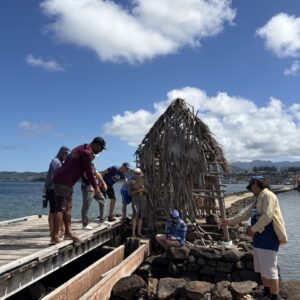
Walking along the outer petimeter of Paepae o He’eia. Photo by Mara Welton.
Picture a pond whose outer perimeter abuts the bay, with several passageways that allow water to flow between the fresher, but still brackish water of the pond into the saltier water of the bay and back. The pond has a wide variety of fish including several species of mullet and tilapia, as well as different species of limu. The fish swim in as babies, but grow to the point where they can’t swim back to the ocean. Reproduction occurs naturally, not by human intervention.
As we walked along the outer perimeter, I thought of the work to maintain the balance between life in the pond, and life in the bay. And I reflected on Paepae o Heʻeia’s mission to educate the community about the pond’s history and its cultural significance now and in the future, while also sharing that harvest with the community. Again the theme of ʻOno and Pono.
KNOW FISH Dinner
The final community engagement for this trip was a KNOW FISH Dinner, where about 65 folks from across Oʻahu and beyond gathered to hear the story of the seafood they ate directly from the producer, the fishmonger or an invasive species expert.
-
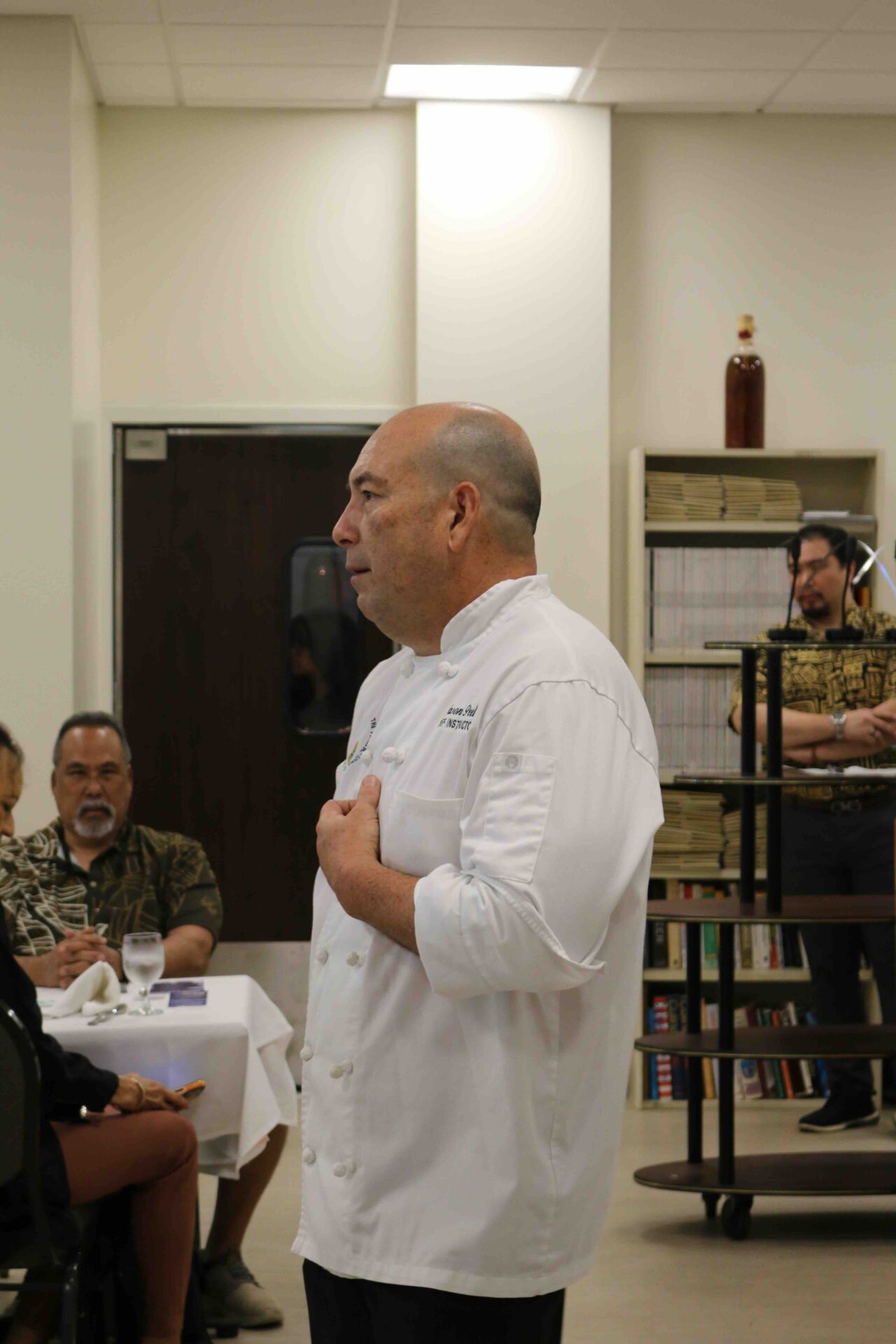
- Chef Jason Peel describes the cultural significance of sourcing local seafood for him and his community. Photo: Vincent Maverick Jagon
-
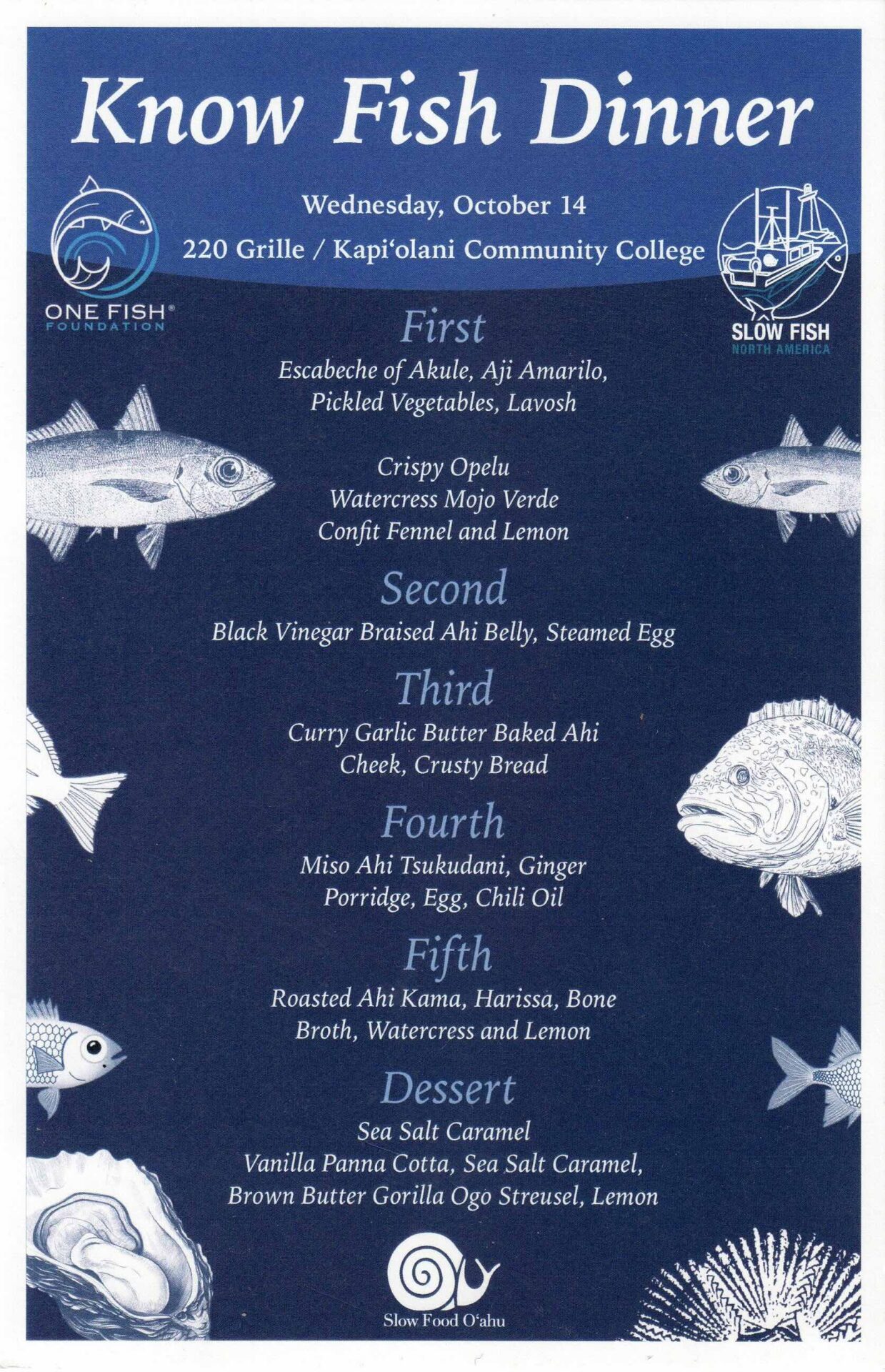
- Know Fish Dinner Menu
The event was hosted by Chef Jason Peel and his culinary students at the 220 Grille housed within the Kapi‘olani Community College (KCC) in Honolulu. Chef Jason gave his students a hands-on course on handling local seafood and the importance of local sourcing as they prepared an amazing 6-course meal featuring everything from Escabeche of Akule (bigeye scad), to Miso Ahi (yellowfin tuna) Tsukudani and Roasted Ahi Kama (the collar of a yellowfin tuna, about half the circumference of a hubcap) to a Sea Salt Caramel Panna Cotta with Brown Butter Gorilla Ogo Streusel.
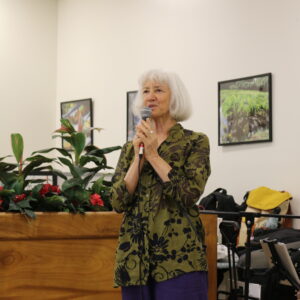
Slow Food O‘ahu leader Laurie Carlson at the Know Fish Dinner.
Each course had its own unique story paired with a distinct flavor, and attendees learned from Riggs and Chris about life on the water. They learned from Ashley about working directly with fishermen and telling their stories to her customers. Jhana described the Taʻape Project and the beautiful conservation mission of eating invasive species. And folks learned about why knowing the story of their seafood and buying from local producers and fishmongers can help turn the tide against the industrial seafood supply chain.
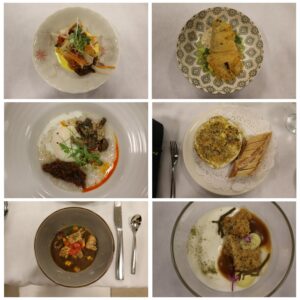
The six course KNOW FISH dinner. Photos by Vincent Maverick Jagon.
They asked great questions. They learned how Riggs and Chris fish, where they fish, the variability of the market and what motivates them to go out every day when they can. They learned how each local seafood purchase impacts the broader community. They learned how the scale of seafood farming, even in Hawaiʻi, matters to the local ecosystem, the community and cultural narratives. We held up Kualoa Ranch and Paepae as examples of aquaculture with values.
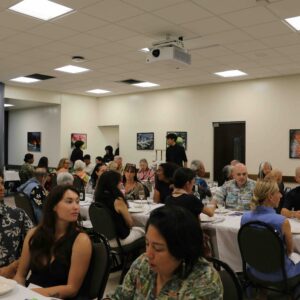
Food and storytelling make a great pairing for KNOW FISH Dinners. Photo: Vincent Maverick Jagon
ʻOno and pono.
Finding that balance and willingness to connect and learn is the driver behind the Slow Fish Rising Tide program. We’ll continue to broaden our reach in Oʻahu and elsewhere with the spirit of “aloha” and ”ʻono and pono.”
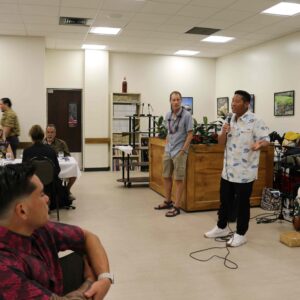
Audience members listen to stories from chefs, fisherfolk and harvesters as they eat local seafood. Photo by Vincent Maverick Jagon.
Many thanks to our partners, including Laurie Carlson of Slow Food Oʻahu; Chef Jason Peel at KCC; Ashley Watts of Local Iʻa; Jhana Young and Vincent Maverick Jagon of Conservation International; Fisherman Riggs Napoleon; Fisherman Chris Tom; Ingrid Lassleben of Kualoa Ranch; and KCC Department Head Grant Itomitsu for welcoming us to the Chefs Camp with a traditional ʻoli!
Top photo: discussions about the challenges fishermen and chefs face in getting local seafood into more restaurants and possible solutions. Photo by: Vincent Maverick Jagon.