
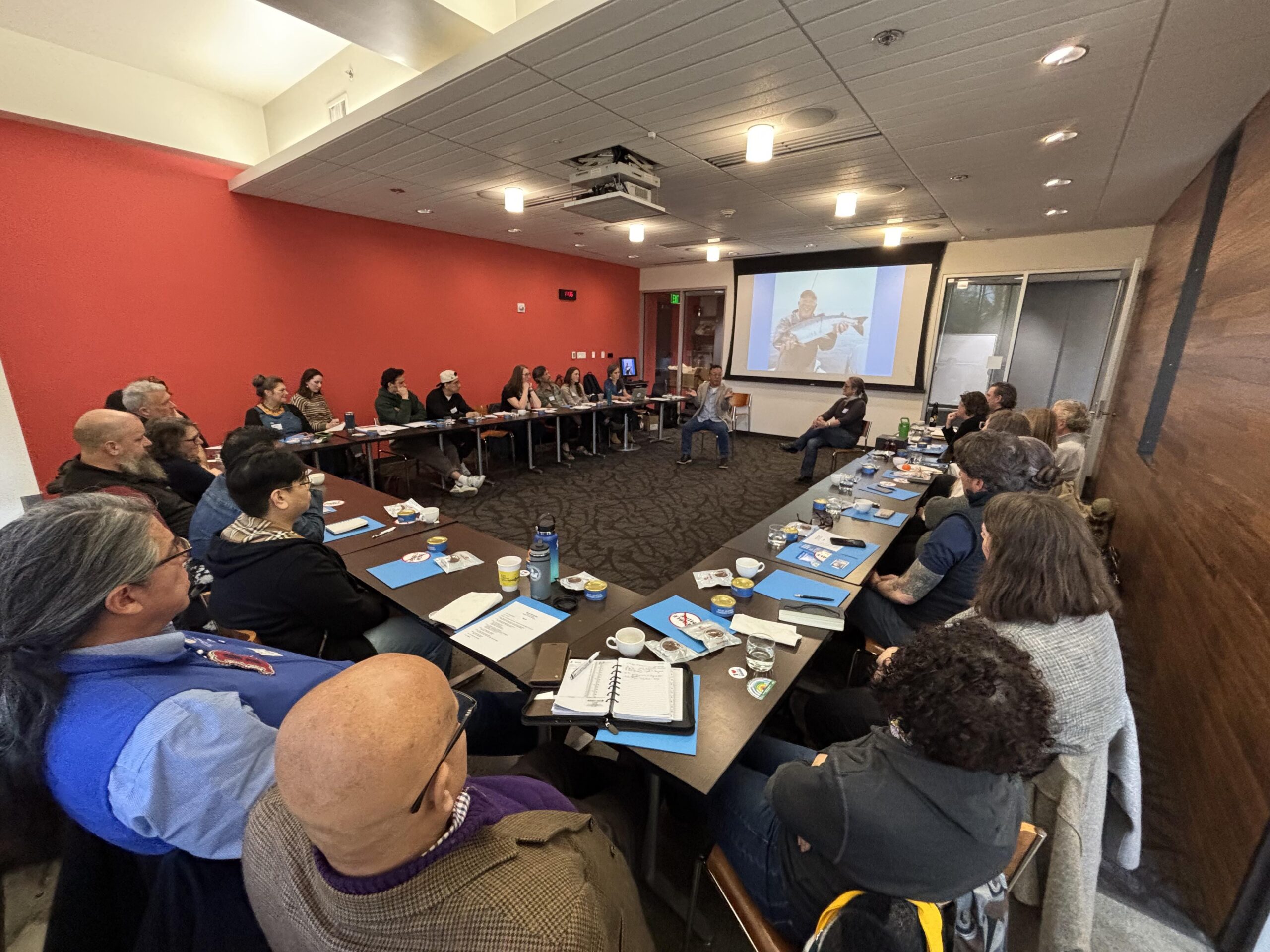

Thirty chefs, fishermen, retailers, distributors and advocates gathered at the Seattle Culinary Academy (SCA) on March 2 to learn about local sustainable seafood and current barriers and opportunities to make it more accessible. At the start of the Chefs Camp, everyone was invited to share a sentence about why they were there and what they hoped to achieve during the day.
Most of their answers focused on some aspect of learning more about local seafood sourcing and making connections with other folks thinking about how to improve that dynamic. By the end of the day, the deep conversations and shared passion for making conscientious decisions led to contact information exchanges and commitments to continue supporting local seafood and direct sourcing.
These new connections and commitments are one way we measure success.
Laying the foundation
The Seattle Chefs Camp was the first engagement in One Fish Foundation’s Chefs Community Series, a three-year program aimed at promoting local seafood systems by creating several different community engagements in Boston, New Orleans and Seattle. Chefs Camps are the first step in the process to help form dedicated teams of local chefs and seafood producers to plan and execute community events aimed at bringing more folks into the conversation about why they should care about supporting local seafood and local seafood producers.
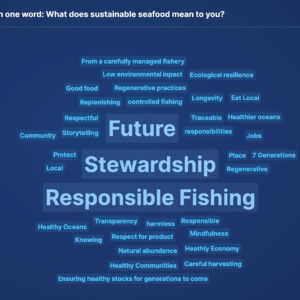
We set the tone by asking everyone to share their vision for sustainable seafood. Much of the feedback centered on long-term stewardship of the resource, including sustainable (minimal ecological impact) harvest methods, good management and a vision for supporting healthy populations. Buck Jones of the Columbia River Intertribal Fish Commission emphasized this point later in the day when he described how tribal communities think how today’s decisions could impact the next seven generations.
Transparency and storytelling around local seafood were also important in the poll.
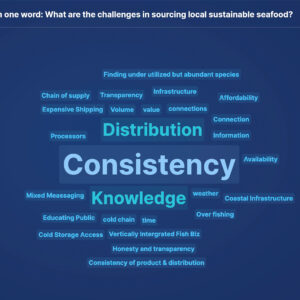
Chefs next shared some of the challenges they face sourcing local seafood. Consistency, knowledge of what’s available when, distribution, lack of transparency, and cold storage were some of the responses submitted.
One crucial theme affecting both sustainability and challenges that arose several times throughout the day? Relationships.
Transferable Trust
Taichi Kitamura of Sushi Kappo Tamura described how sushi is very ingredient driven, which can be a challenge for him as he primarily sources seafood from the Pacific Northwest, not Japan. Seasonality definitely affects what’s locally available when, so he often makes menu decisions that incorporate both fresh and frozen fish. During the winter months when fresh salmon isn’t available, he sources frozen wild Alaska salmon directly from Amy Grondin of Duna Fisheries or Mark Titus of Eva’s Wild.
Not only does he know the fisheries where these salmon come from are some of the best managed fisheries in the world, he also trusts Amy and Mark in terms of how they handle and process their product. The quality is exceptional. So when he serves Amy’s Chinook or Mark’s sockeye to his customers, he’s transferring his trust in Amy and Mark to his customers. Sharing the story of where the salmon came from and how it was processed reinforces that “transferrable trust.” According to him, “If we tell the story, then customers will listen. People are hungry for real stories and connection,” he said.
Nelly Hand of Drifter’s Fish echoed the themes of trust and direct supply chains as she described how only her hands touch her fish before delivery. From carefully removing all of the blood that could degrade flavor and consistency to choosing environmentally friendly packaging, her focus is on both product quality and minimizing environmental impact. This extends to where and how she fishes. She described how the state of Alaska hires people to count individual fish swimming past the fleet upriver to spawn to ensure healthy future populations. “I may not always have fish, but having fish in the river is more important than getting to go out fishing all the time,” she said.
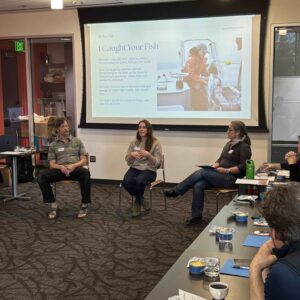
Preston Onkst, Nelly Hand and Amy Grondin (l to r) share perspectives on direct sourcing.
Amy Grondin and husband Greg adapt to shifting seasons by fishing along the Oregon, Washington and Alaska coasts from April into October. Amy described how they freeze the Chinook and coho they catch at sea to preserve quality and flavor. During the rest of the year, Amy delivers her catch to local restaurants throughout Seattle and beyond, building and strengthening relationships with each delivery.
Preston Onkst of Wild West Fish, a fish distributor based out of Port Angeles, WA, said he is very particular when choosing fish for his chefs because they’ve placed their trust in his ability to discern the highest quality. That trust has evolved over time. “I enjoy rejecting fish that wouldn’t work for my chefs,” he said. Similarly, he has built strong relationships with local fishermen along the Washington coast, trusting in their sustainable fishing and quality-driven processing practices.
Selling sablefish
“We need to keep more domestic seafood in the U.S.,” said Katie Harris of Fishing Vessel Owners Association and NW Sablefish, a marketing organization promoting wild sablefish harvested from the Northwest and Alaska. Often called black cod or butterfish, sablefish swim deep, from about 600 feet to several thousand feet. They are high in Omega 3 fatty acids and ridiculously tasty thanks to their high oil content. Getting more chefs to source local sablefish means education, according to Katie.
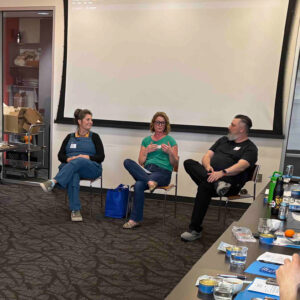
Laurie Olsen, Katie Harris and Michael Offerman (l to r) discuss harvesting, processing and marketing sablefish, otherwise known as black cod or butterfish.
Laurie Olsen of You are What You Eat Fish Company in Bellingham echoed that sentiment. To maintain quality, they only work with one processor they trust, providing beautiful sablefish to chefs and consumers in the region. As part of the chef and public education campaign, she cited an Oregon State University study showing that sablefish held up better than other species when frozen for 2 years. In fact, test subjects preferred the sablefish that had been frozen for two years over that which had been frozen for 6 months.
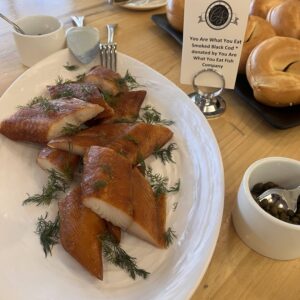
Feeding the body and the mind go hand in hand at Chefs Camp!
Sustainability is a prime focus for Captain Michael Offerman and his crew on the F/V Pacific Sojourn. He described using slinky pots, which are collapsable cylinder nets that allow sablefish to enter the trap, avoiding the issues with sperm whales pilfering fish hooked on longlines. Any bycatch is safely returned to the ocean. That approach to the fishery is important to the story of his harvest.
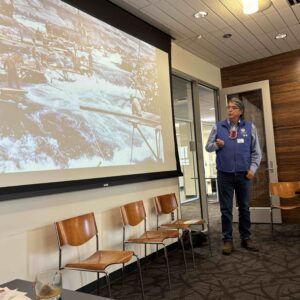
Buck Jones explains how sustainability has been at the root of tribal wild salmon harvest since time immemorial.
Balanced fisheries management
Sustainability has always been at the heart of tribal fisheries, according to Buck Jones. “Salmon is not a commodity for tribes,” he said. “It’s their culture, identity and tradition.” He described how they intentionally let enough fish upriver to spawn, and only fish when they determine enough have passed to sustain the population. The Columbia River Intertribal Fish Commission (CRITFC) has trained over 700 fisherfolk on federal health and safety measures so they can process and sell their catch. His mission is to promote tribally caught fish outside of CRITFC territory, which he has been doing since 2015.
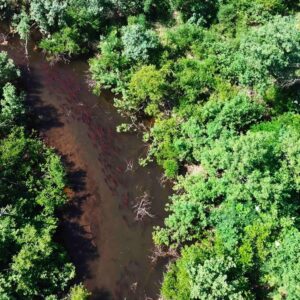
Mark Titus shared a compelling short film featuring the people, the salmon and the habitat of Bristol Bay, AK, where he sources the sockeye for Eva’s Wild.
Film director Mark Titus began his story with a short film highlighting both the beauty and bounty of Bristol Bay, AK., home to the world’s largest wild sockeye run, and where he sources sockeye for his Eva’s Wild product line. That story of exemplary fisheries management and of some of the people who fish it is integral to the product quality and to the relationships he’s forged with chefs across the country, including Taichi, Renee Erickson (of Sea Creatures restaurants) and other chefs attending the Chefs Camp. Mark has produced and released two films, The Breach and The Wild, that focus on restoring and protecting wild salmon habitat, especially from industrialization such as the proposed Pebble Mine at the headwaters of Bristol Bay. The third film in the trilogy, “The Turn,” will be released in 2027. Eva’s Wild commits 10% of profits back to indigenous-led efforts to protect Bristol Bay salmon habitat by contributing directly to its communities.
Throughout the day, attendees asked great questions, engaged in thoughtful conversation about product storytelling, education, aquaculture, processing and distribution. The ebb and flow of the conversation reflected both the complexity of the issues and the shared passion in the room for finding solutions.
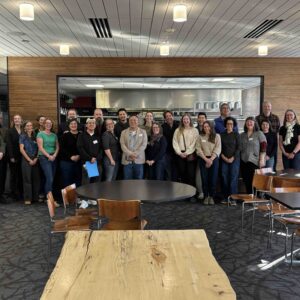
Building community, one conversation at a time.
Building community
Seattle is in one of the seafood capitals of the world with an abundance of delicious, high-quality seafood produced locally. There’s a list of reasons why that seafood isn’t more prominent on more restaurant menus around the city, beginning with price and habit.
The Seattle Chefs Camp has laid a solid foundation for changing that dynamic by fostering more direct connections between chefs and local seafood producers, exploring ways to engage the community in these types of conversations and getting the word out on why supporting local seafood matters.
And the community of local chefs and fishermen we’re building, one relationship at a time, will continue to elevate that message.
Big thanks to all of our storytellers for sharing perspectives and inviting conversation about what they do and why they do it! Huge thanks to Chef Kären Jurgensen, SCA Assistant Dean Aimee Lepage and the rest of the SCA culinary team for hosting us and preparing such excellent food!
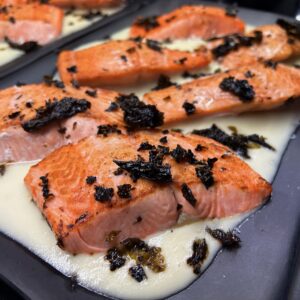
Pan-Seared Duna Fisheries Alaska Troll Caught Salmon, Soubise
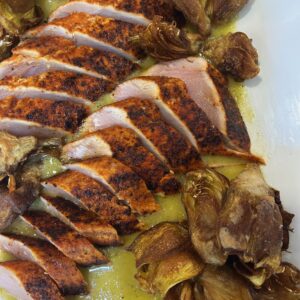
Seared F/V Carol M Albacore Tuna, Artichokes, Green Pepper Vinaigrette
Also, sincere gratitude to everyone who donated seafood for the delicious breakfast and lunch Chef Kären the team prepared, including: Duna Fisheries, Hama Hama Oyster Company, You Are What You Eat and F/V Carol M.
Thanks also to Nelly Hand for sharing her canned smoked coho and to Mark Titus for sharing his smoked salmon jerky with all of the guests.
Finally, huge thanks to Amy Grondin and Elizabeth Dubovsky, Strategy Director of Alaska Longline Fishermen’s Association, for their immense effort as Chefs Community Series Local Organizers for Seattle for all of the on-the-ground organizing to make this event happen!
Top photo: Chef Taichi Kitamura and Amy Grondin share perspectives on direct sourcing.
