
Editor’s note: Haley Stein is a friend, colleague and the Communications and Grants Manager for Inland Ocean Coalition. In this guest column, she describes the important work Inland Ocean Coalition collaborates on with friends at North American Marine Alliance, Don’t Cage Our Oceans and One Fish Foundation (among others) to support aquaculture with values (bivalves, kelp, etc.) and call out the threats that industrial finfish farming presents on many fronts. One Fish Foundation participated in the initial gathering to discuss a roadmap for values-based aquaculture in Savannah, Georgia in 2024. As you’ll hear from Haley, that important work continues.
By Haley Stein
I work for a Colorado-based organization called the Inland Ocean Coalition (IOC), building land-to-sea stewardship. We believe people can advocate for ocean health from anywhere on earth, no matter how near or far from the coast they may be. After all, you don’t have to see the ocean to protect it, and ultimately, we are all downstream of each other!
Part of our work at IOC to protect and advocate for the ocean is in making seafood sourcing less of a black box. That’s why we love working with partners like One Fish Foundation, who educate on all things seafood. Finding sustainable seafood is challenging enough for those who live near working waterfronts. The further inland you go, the harder it is to guarantee transparency in the seafood we consume.
People are becoming more aware of the harm caused by large-scale industrial finfish farming, particularly with respect to salmon. But not all aquaculture is created equally. Shellfish and seaweed farming done well can actually have a restorative effect on polluted waters, while supporting local coastal economies. We want to see aquaculture that minimizes harm to the natural environment (like seaweed and bivalves) and creates opportunities for small-scale fisheries become the norm and help meet our increasing demand for seafood.
That’s why IOC is involved in developing the Atlas for Values-Based Aquaculture, an initiative led by partners at the North American Marine Alliance to create a resource hub for small-scale seafood farmers to thrive as they deliver products that are truly sustainable, ecologically sound, and delicious!
As part of the Core Team developing the Atlas for Values-Based Aquaculture, my role is to help construct the project from the ground up. My background in communications helps inform the way we talk about and promote the Atlas.
Using the right language is a key element to ensuring the project’s success. Even the term “aquaculture” can be contentious. For example, New Englanders are excited to be part of a budding aquaculture industry, while on the West Coast, they prefer to refer to their practice as mariculture, a term which specifically relates to seafood farming in the ocean (rather than fresh water ecosystems), and pointedly excludes finfish operations. This could understandably create confusion, not only among consumers, but even among farmers themselves who operate on different coasts, making it more challenging to distinguish seafood products that were grown with an ethical standard. We’ve also learned that some cultures don’t even distinguish between wild harvest and farming seafood, and largely consider these practices as an integral part of environmental and community stewardship. Including a glossary of culturally-specific language will be one of the resources the Atlas provides, alongside maps, stories from folks doing it right, and other tools that can help small-scale seafood farmers succeed.
The project hits home for me, coming from previous work with the Downeast Salmon Federation, an organization restoring endangered wild Atlantic salmon and the Maine rivers where they once thrived. The coast of Washington County, Maine is currently the only site of industrial open-net pen salmon farming in the US. Understanding how industrial salmon farms damage Maine waters and make it harder for wild Atlantic salmon to survive in their native environment motivates me to uphold the values that drive the Atlas forward.
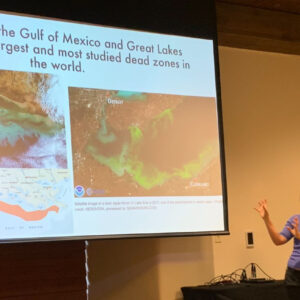
Haley Stein and Mia Glover of Inland Ocean Coalition discussing downstream impacts of pollution in the Gulf of Mexico and the Great Lakes. Photo: Courtesy Inland Ocean Coalition.
So what are the values informing the Atlas? We prioritize securing food supply, safeguarding ecosystems, centering communities, opening opportunities, protecting workers, honoring local knowledge, respecting tribal rights, and upholding accountability of all partners involved. We envision the project as a tool used primarily by and for seafood farmers, but others involved in seafood production and distribution will also find applications within the hub, including chefs, researchers, and creative storytellers.
We look forward to launching later this year! In the process of creating this resource, we have learned a lot about what Values-Based Aquaculture looks like, and are constantly evolving to meet the needs of the communities we hope to serve. We envision the hub to serve as an adaptive resource that will reflect changes in policy, consumer tastes, and other relevant information as seafood farming continues its trajectory as a viable, vital coastal resource.
Personally, I’ve felt most excited not only learning about aquaculture directly from folks on the ground and in the water, but also sampling lots of sustainably farmed oysters, mussels, and seaweeds along the way.
Get in touch to learn more about Aquaculture with Values, IOC, and opportunities to contribute to this work: haley@inlandoceancoalition.org
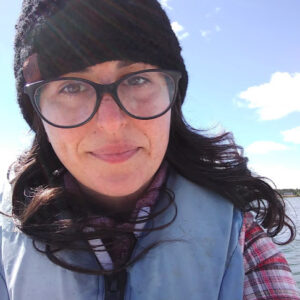 Haley Stein is the Communications and Grants Manager for Inland Ocean Coalition. Originally from Kentucky, Haley is passionate about making ocean advocacy accessible to people who care about the health of salt water ecosystems as much as they do their local rivers, streams, and waterways, whether they live near or far from the coast. She has a background in researching aquatic organisms and experience in watershed restoration, which has taken her around the world, from Southern Spain to Eastern Maine. When not engaging in ocean storytelling and advocacy, she enjoys cooking (especially fresh, local seafood!), paddle boarding, and browsing second-hand stores.
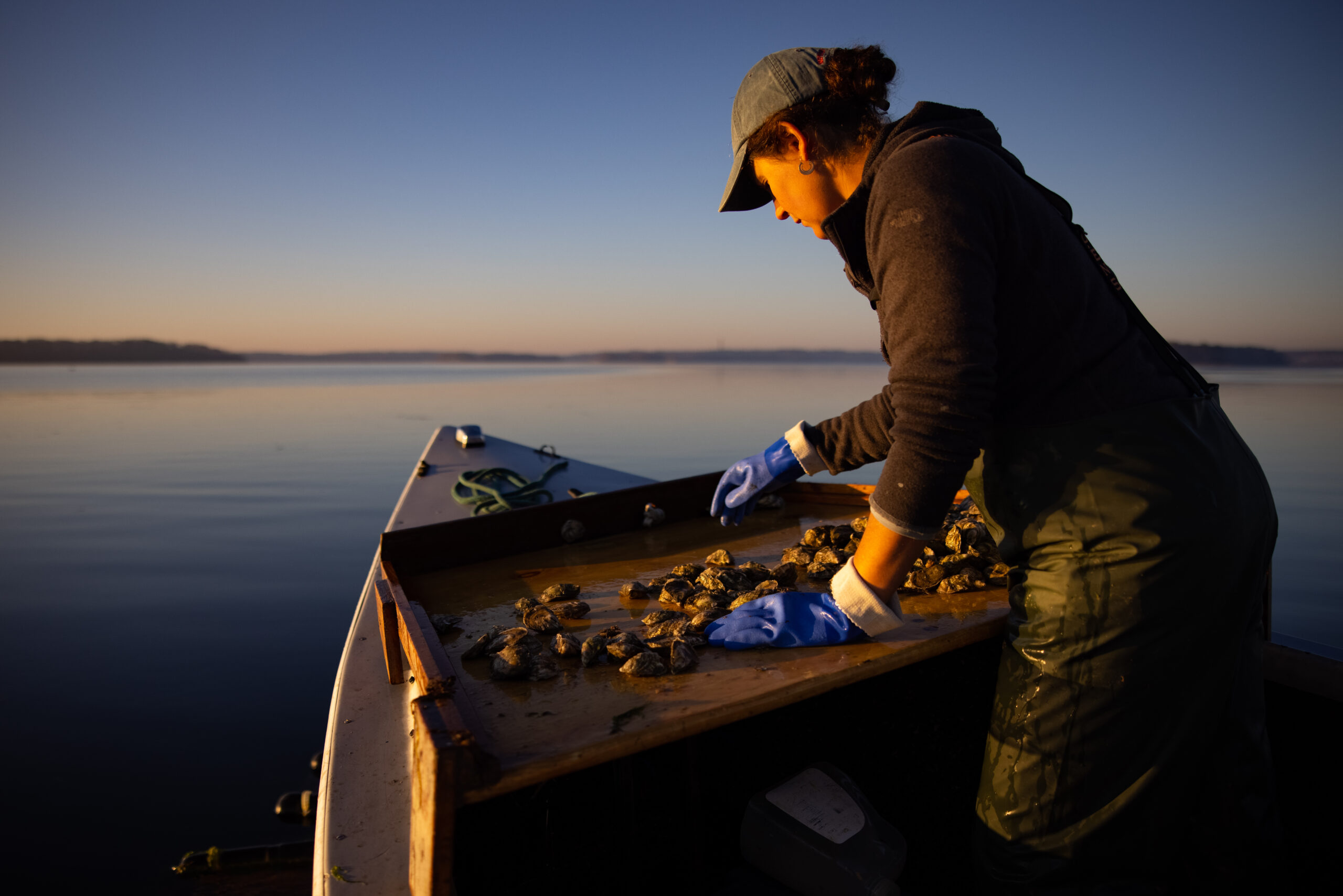
Top photo: Emily Selinger of Emily’s Oysters, sorting her product in Casco Bay near Freeport, Maine. Courtesy Emily Selinger.
