

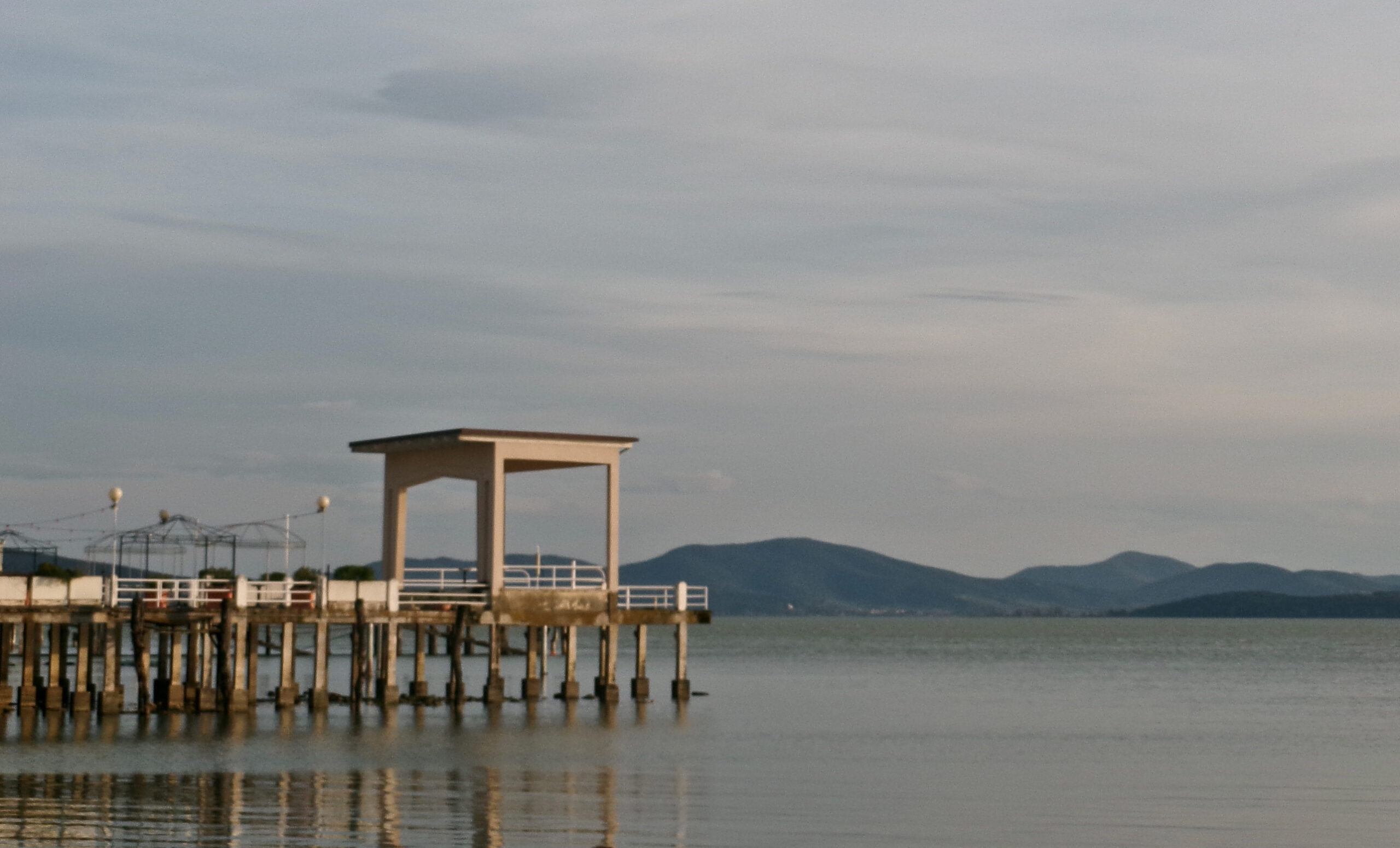

Editor’s note: One Fish Foundation communications Intern Emma Loller has spent the last few months in Perugia, Italy as part of her study abroad program. She is a junior at Bryn Mawr College in Philadelphia, and she began working on social media campaigns for One Fish Foundation and Slow Fish North America a year ago. In Italy, her studies have largely focused on local food systems, agroecology and sustainability. One particular course brought her class to Lake Trasimeno, where they met a local fisherman who also owns a restaurant. This blog is a reflection of Emma’s rich experience hearing Guido’s story and eating his seafood. Enjoy!
By Emma Loller
During my semester abroad in Perugia, Italy, I have had the pleasure of participating in a course titled: Water Resources: Environment, Health, and Power. In this course, we explore all aspects of water, including the science and nature behind it, water rights, how water appears in religion and culture, and marine and freshwater biodiversity. As part of this course, we took a field trip to a nearby body of water called Lake Trasimeno, and it turned out to be one of the most engaging experiences of my time here.
The lake has supported a a fishing culture in Umbria for millennia. Photo: Emma Loller
Lake Trasimeno is the largest lake in central Italy, measuring about 50 square miles and one of the most ecologically distinctive in all of Europe. What makes it unusual is that it has no natural tributaries, meaning no rivers flow in or out of it. Instead, the lake is fed by rainfall and is highly sensitive to seasonal shifts. This makes it vulnerable to both flooding in wet years and severe drought in dry ones. The lake hosts a rich variety of species: today the most common fish include eel (native to the lake), black bass, perch, queen carp, tench (a freshwater fish from the carp family), smelt, crucian carp, catfish, and freshwater shrimps. The lake has supported fishing communities since at least the Etruscan era (between the 8th and 3rd centuries BCE) , thousands of years before Italy as we know it existed.
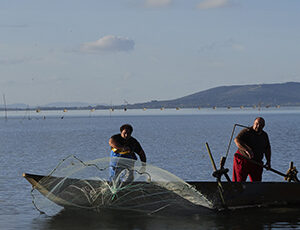
Lake Trasimeno Fishermen. Photo: Courtesy of Slow Food
The fishing boats used on the lake are themselves a piece of history. The traditional vessels of Lake Trasimeno are called foderi, flat-bottomed wooden boats uniquely designed for the lake’s shallow depth (averaging about 16 feet).
Yet despite this deep-rooted history, the fishing culture at Lake Trasimeno is quietly disappearing. The number of working fishermen on the lake has been declining steadily every year. Younger generations are not taking up the trade, and those who remain are aging. The fish caught here, once a staple of the regional diet in Perugia and the surrounding Umbrian towns, are becoming harder to find on local tables, even as the lake sits just a short drive away.
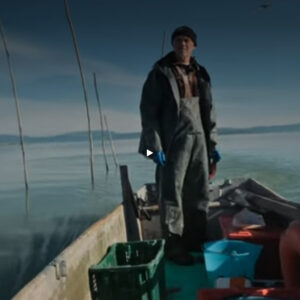
Guido Materazzi fishing on Lake Trasimeno. Image: Michele Bordellini
Our class got a rare glimpse into this world when we visited the lake and met Guido Materazzi, a local fisherman who lives and works out of Castiglione del Lago, one of the main towns along the shore. Guido first obtained his fishing permit at the age of 18, though he left the activity shortly afterwards. He returned to fishing after founding the Arbit Association in 2006, an organization dedicated to preserving local fishing traditions. Guido walked us through the different types of nets and fishing methods used on the lake, explaining how each technique is suited to a different fish or season.
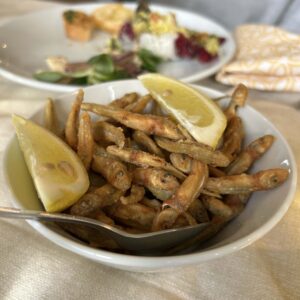
Fried Lake Trasimeno smelt. Just the right balance of crunch and full flavor. Photo: Emma Loller
What made the experience even more complete was that Guido also owns a restaurant in town, called La CaPannina, where he serves the fish he catches from the lake. The meal we enjoyed was a testament to this. For the appetizers, we were served a combination of perch, tench, and carp; the first course featured a white sugo with perch; and the red sugo, a ragù di pesce, was a mixture of various lake fish. This brought everything full circle. It was a grounding reminder of what truly local food looks like, not as a marketing label, but as a lived reality.
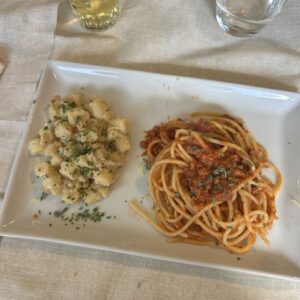
Lunch at Lake Trasimeno: White sugo with perch and red sugo, ragù di pesce, a mixture of various lake fish. Photo: Emma Loller
As someone who cares deeply about protecting aquatic life, conserving natural ecosystems, and eating sustainably, this experience resonated with me on a personal level. It raised questions I am still sitting with: What does it mean to preserve a fishing tradition that is fading? How do we balance conservation of fish populations with the livelihoods of the people who depend on them?
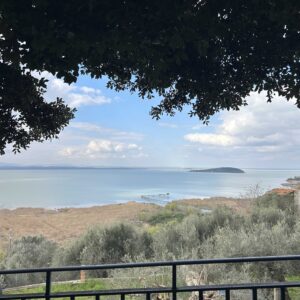
Lake Trasimeno is the largest lake in central Italy, and the fourth largest in the country. Photo: Emma Loller
These are questions I intend to carry with me, knowing the answers will take time and experience to find. But my work with One Fish Foundation is helping me sit with that complexity more thoughtfully, broadening my understanding of the organizations working to address these challenges, and doing so in ways that are responsible, community-centered, and built for the long term. Experiences like this one remind me why that work matters, and why I want to keep learning.
Top photo: Lake Trasimeno in Umbria, Italy. Photo: Emma Loller
