

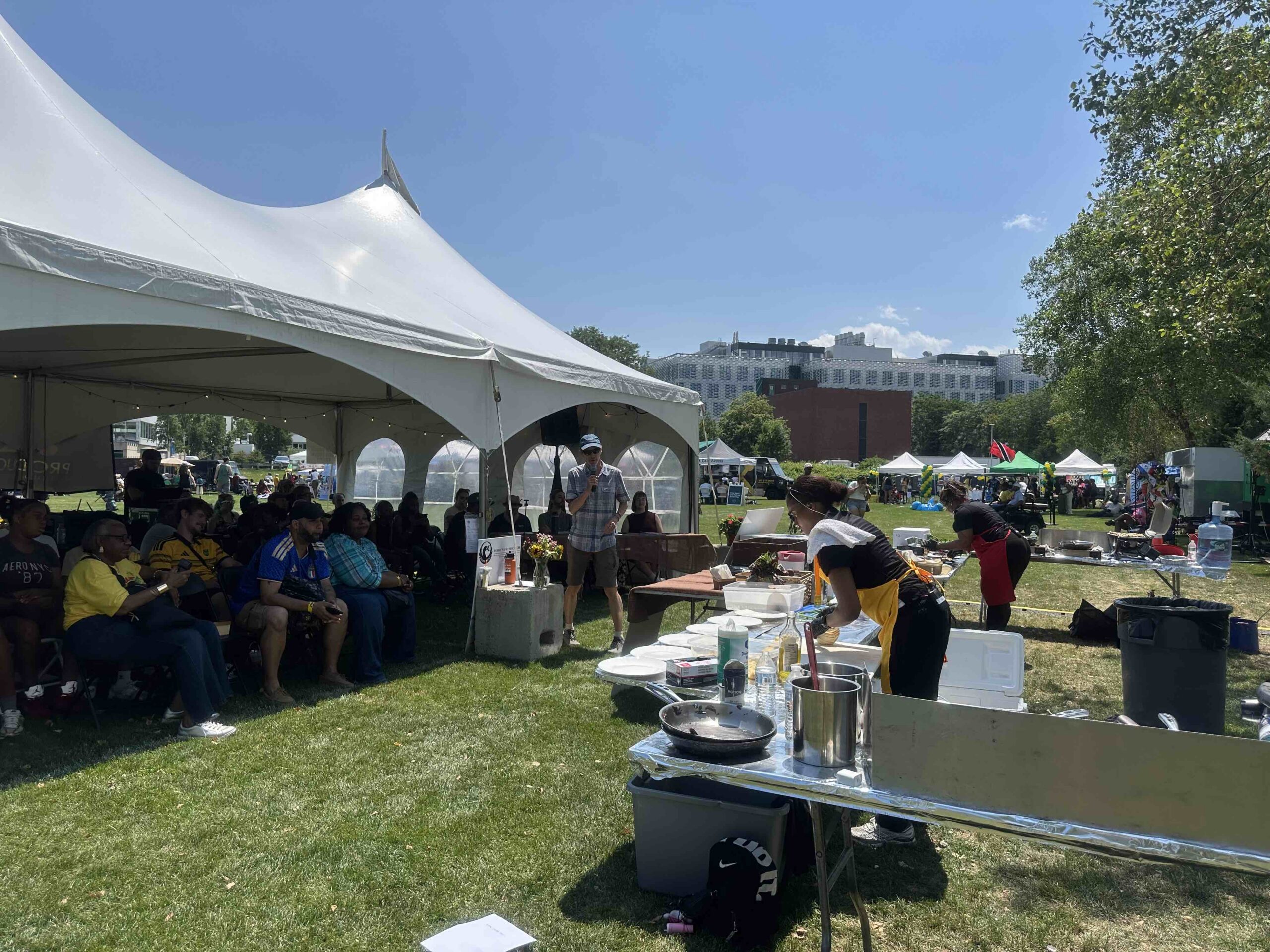

On a sunny Saturday in July, Chef Morgan Spivey and Chef Karisma (Kadijah Warren) competed in a Seafood Throwdown in Boston to win the votes of a panel of seafood lovers and connoisseurs. The chefs had an hour to prepare a Caribbean-spiced dish using three of their favorite ingredients and a seasonal, locally-sourced mystery fish.
It was the second day of the 13th annual Boston JerkFest, running from July 10 – 12 at Harvard’s Ohiri athletic field. The North American Marine Alliance has partnered with Boston JerkFest for more than a decade to bring a local seafood narrative to this celebration of Caribbean culture and cuisine via the Seafood Throwdown. Red’s Best supplied the fish, and Lexavah Farms brought crisp produce for the chefs’ dishes.
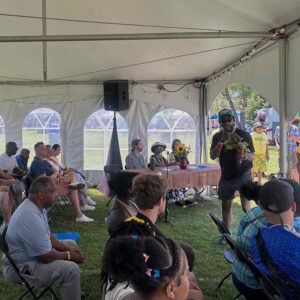
Chef Chris Faison passionately describes why he insists on using fresh local ingredients during the Seafood Throwdown. Photo: Kiran Johnson
Chef Chris Faison, one of the Throwdown judges as well as a longtime collaborator and occasional competitor, revealed the fish at the start of the competition: locally-caught pollock. He held up the whole fish, nearly the length of his arm, for several rows of seated audience members to observe. Ready, set, go. The competition was on!
As the countdown began, Colles Stowell, One Fish Foundation president and fourth-year emcee at the event, engaged the audience on the importance of relationships in seafood.
“Next time you buy seafood, ask where it came from,” he said, urging folks to get to know the person selling the fish, if not the fisherman.
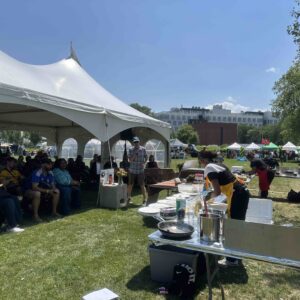
Colles describes the importance of local sourcing for chefs like Morgan and Karisma. Photo: Kiran Johnson
In an age where seafood is often imported or caught locally, then shipped across an ocean for processing before reaching a consumer’s plate, many retailers and chefs don’t know where the fish they’re selling came from. It’s not just the freshness of the seafood that gets lost with the distance, but the accountability.
Knowing the story behind seafood turns a purchase into something closer to an investment. Purchasing from trusted fishermen and farmers is investing in local seafood harvesters and the sustainability of the waters they work in. This philosophy of knowing the story behind the food also applies to chefs.
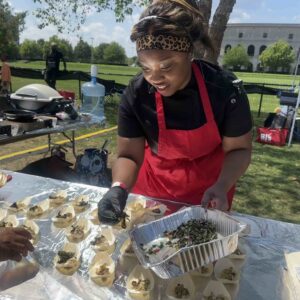
Chef Karisma plates tastings of her dish after describing the cultural roots that guided her recipe.
The audience got to know their Boston-based culinary competitors: Chef Spivey works at Luxe P Kitchen and is a chef trainer at New Beginnings, a program to train recently incarcerated folks to be chefs; and Chef Karisma runs Spicy Flavaz Catering and Restaurant.
At the five minute-mark, Chef Spivey placed shreds of crisp lettuce onto a dish with a dense, crumbly and savory cornbread cake sitting on top of pollock and rice with tomato sauce. Chef Karisma scooped a side of sweet, citrusy sautéed vegetables onto a plate with juicy grilled and spiced pollock. The chefs made five plates for the judges and thirty samples for audience members.
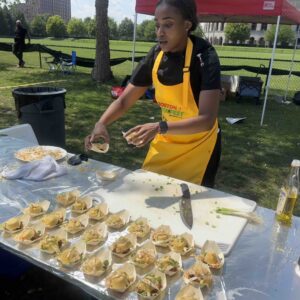
Chef Morgan Spivey describes the Caribbean flavors she infused in her dish. Photo: Kiran Johnson
Based on the criteria of taste, use of the pollock, originality and presentation, the judges decided that Chef Morgan was the throwdown’s winner. But the true victor was the audience: through the chefs’ stories, piping hot samples, and the conversation about knowing their relationship to the seafood they eat, they had the chance to deeply connect with the pollock they sampled.
Top photo: Seafood Throwdown under way during Boston Jerkfest 2026. Photo: Kiran Johnson